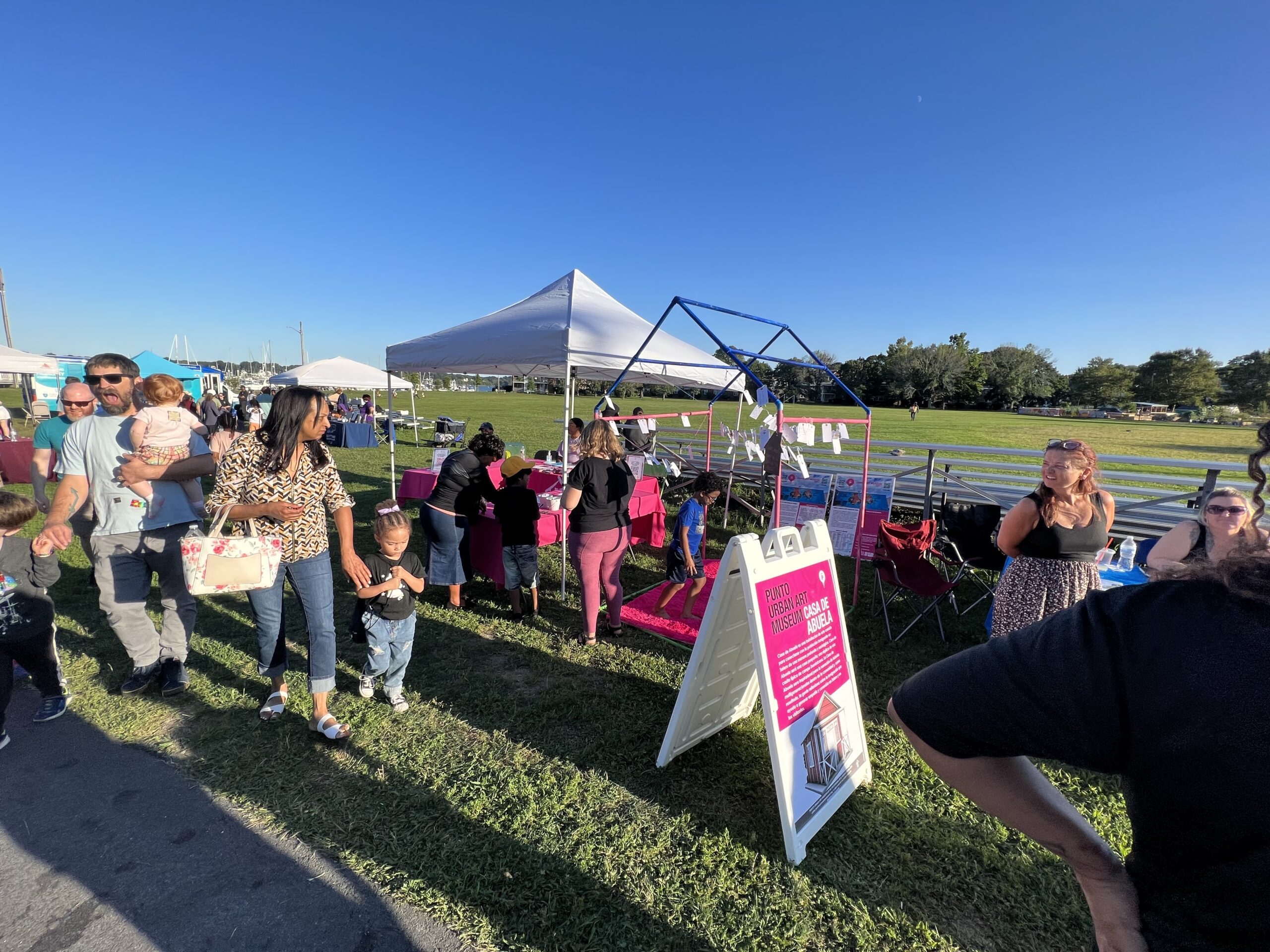
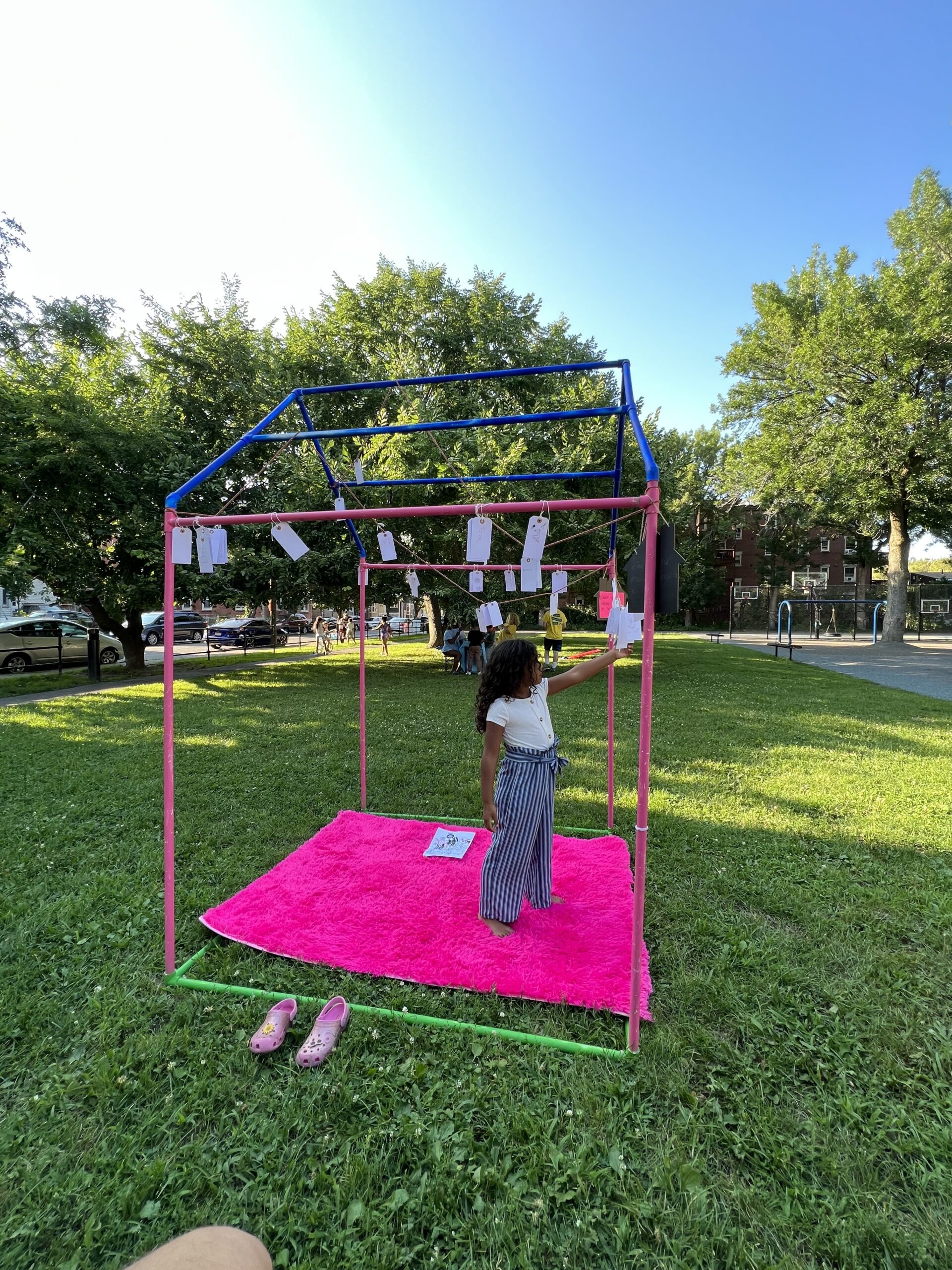
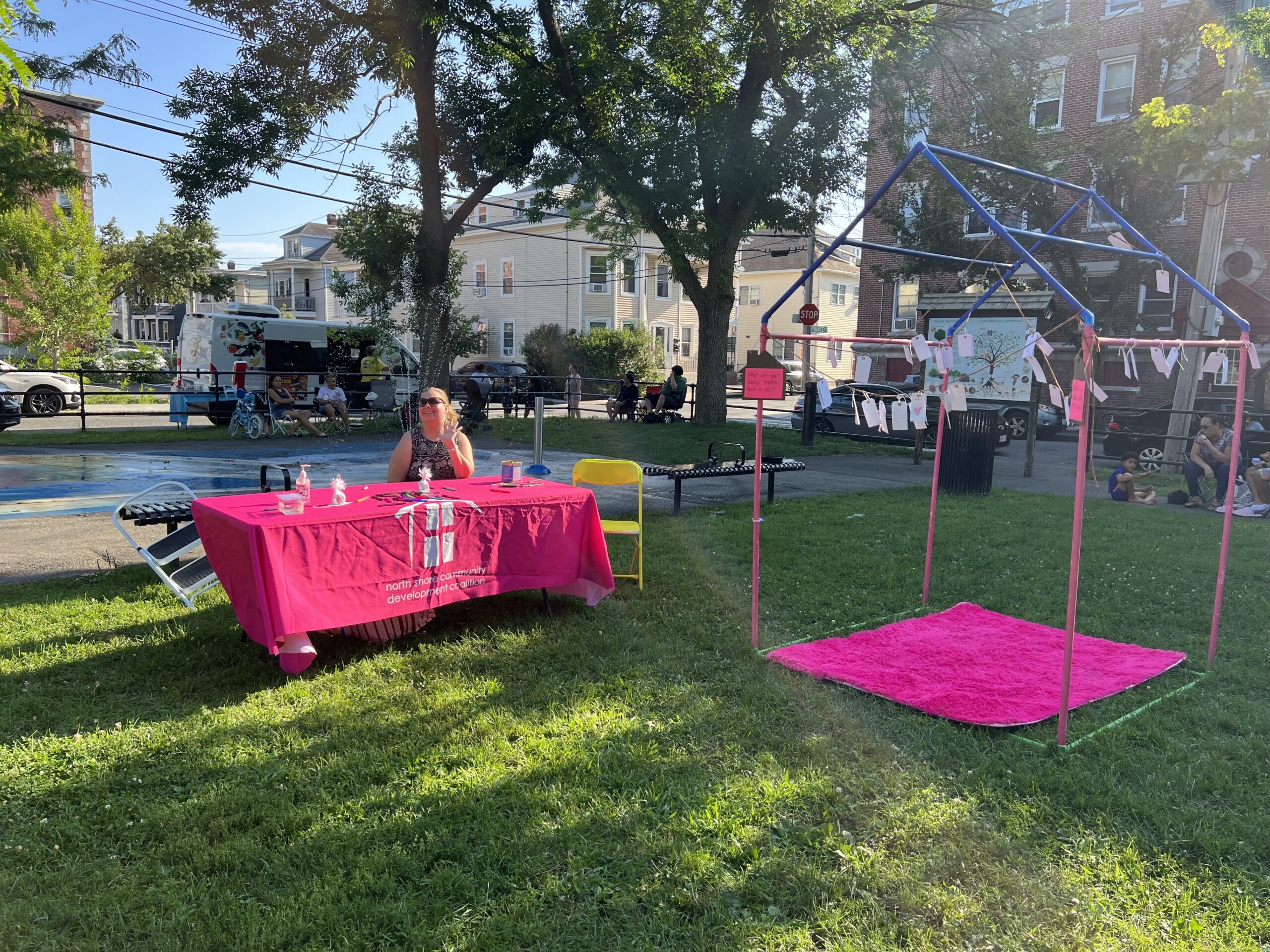
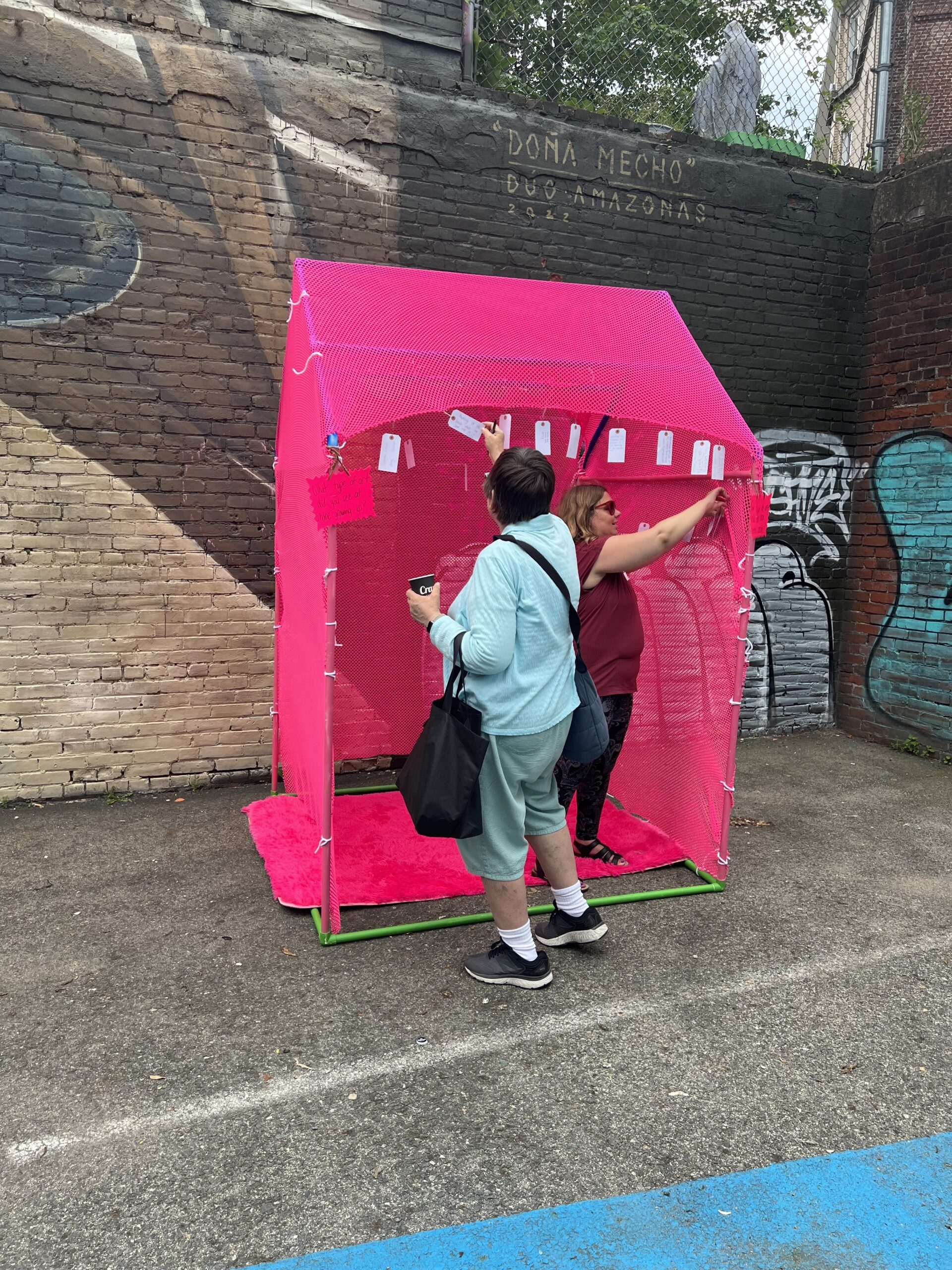
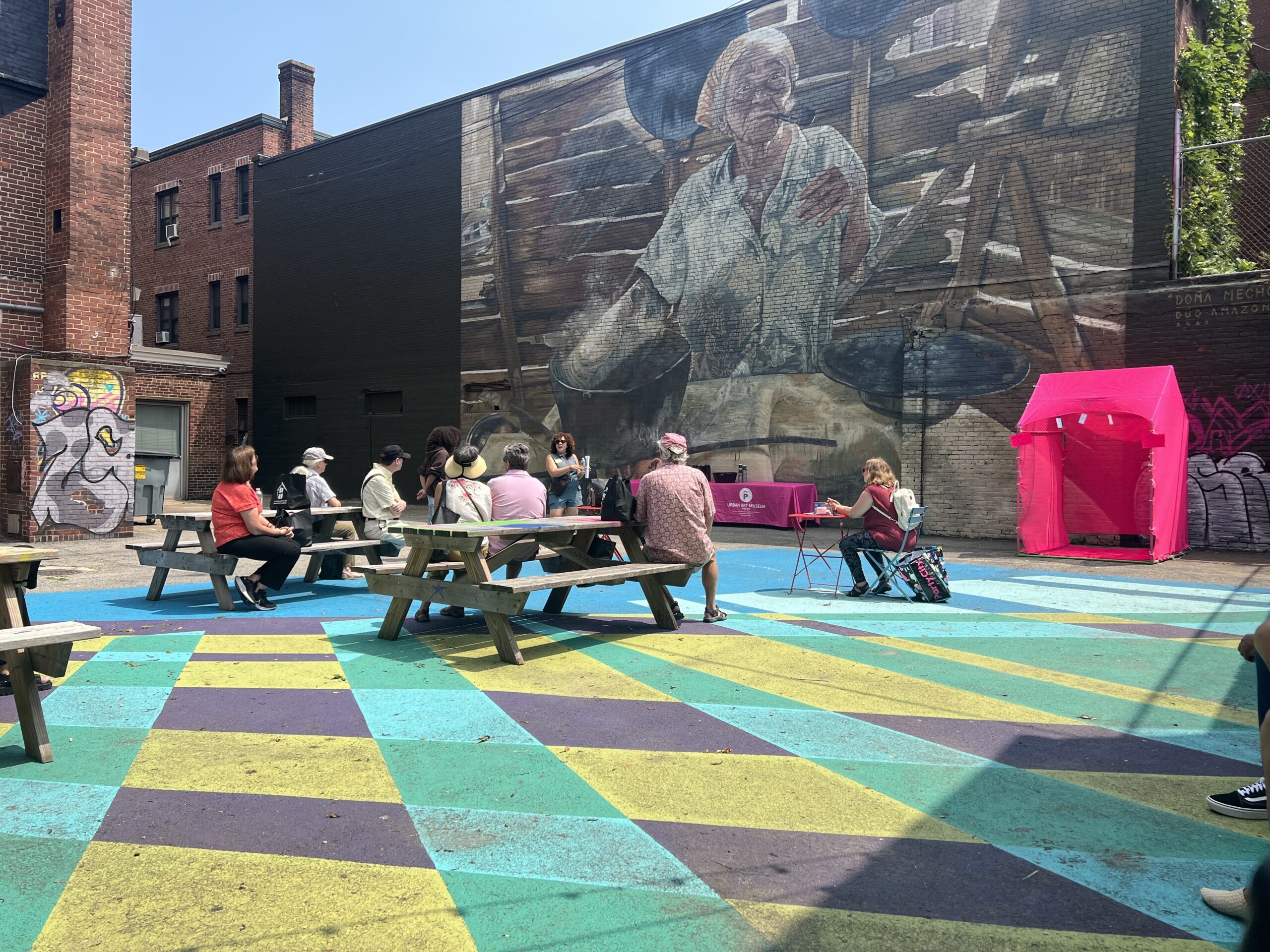
Casa de Abuela is a creative placemaking installation created to connect with the Latino residents living in the Point neighborhood and beyond in a deep and immersive way. As a hand-built replica of a typical Dominican country house, the casa offers PUAM an innovative opportunity to engage the community. By converting a former parking lot into a community hub for events like our Night Market (Mercado de noche) and Cafecito con pan. At la casa, Latino residents can reflect upon their roots through storytelling, partake in cultural celebrations, while sharing this experience with visitors.
The design of our Casa de Abuela is four walls built with palm wood harvested in the Dominican Republic, corrugated tin roof panels, and operable shutter-style wood windows; all known elements in a real, life-size Dominican country house. The four rooms hold furniture and trinkets on loan from 18 Dominican Abuelas we interviewed in Bonao, Loma Blanco, and Santiago de los Caballeros, DR. Each room reflects the lives and stories from our Dominican grandmothers.
A small window and chalkboard recreates the convenience store element in which Abuelas sold what they harvested or grew on their properties, i.e., bags of ice, eggs, café, tobacco or chicharrones. Throughout the year, PUAM will host simple cultural events to deepen this experience for residents and visitors.
La casa is open from May to October,
every Saturday from 12-5pm.
Join us for Cafecito con pan as part of Essex Heritage’s Trails and Sails on October 3rd from 12-5pm!
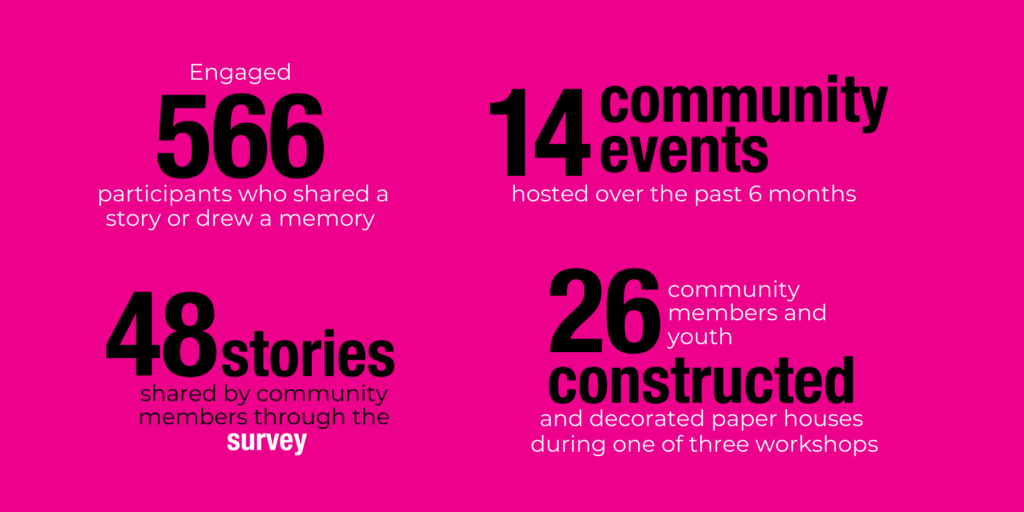
Jill Eshelman, PhD, of Thriving Places Collaborative has been leading the community engagement efforts for the Casa de Abuela project. She has been leading creative workshops and gathering stories at community events about various aspects of home and memories of peoples’ grandparents’ houses. These stories will be used to inform the design of the Casa de Abuela when it is built in the summer of 2024.